INK PAD · VIOLET
HAND MOUNT
tap pad, then tap docket
SZCZEPANIK & VAILRUBBER STAMPS · TROPHY & PLATE ENGRAVING
1119 W. BROAD ST., BETHLEHEM PA
867‑4042 · CLOSED SUN
867‑4042 · CLOSED SUN
DOCKET NO. 4417
Sold toKreuzer Bros. Plumbing & Htg.
Order taken byM.S-V.
Promised forFri. 8/26 4 PM
Point size (whole chase)10 pt
Die width available17 picas (2⅔")
Mount
| LN | DESCRIPTION — COPY AS SET | QTY | UNIT | AMOUNT |
|---|
Die & Setup
Subtotal—
PA Sales Tax 6%—
Deposit paid 8/22—
Balance due—
FORM 12‑C — DOCKETS WRITTEN: 0 / RESETS: 0 / MATRICES HELD: 0
WHITE — REGISTER · YELLOW — SHOP · PINK — CUSTOMER
At the counter, 4:31 PM
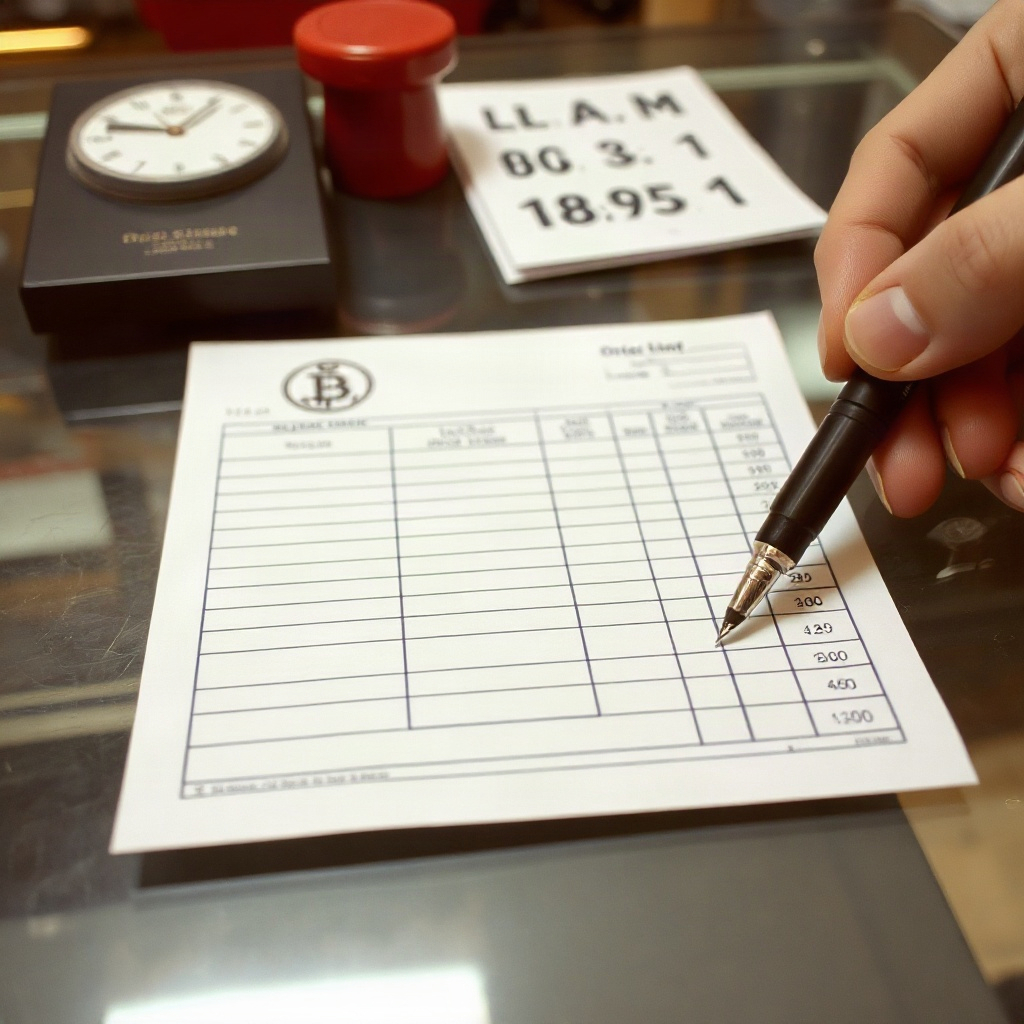
Alright. Four lines is what I quoted you Monday and four lines is what's on the Monday slip, and I'm not going to pretend otherwise. Tuesday somebody calls in and gives Ronnie two more lines — the branch address and the after-hours number — and Ronnie writes them on the back of a pad and doesn't put a name on it. That's my complaint and it's the only one I've got. I don't know who called. I can't call him back and ask him which two lines he'd rather lose.
Here's what happens when two lines come in. Setup on a stamp isn't rubber. Rubber is nothing. Rubber's forty cents of gum on a matrix I already made. Setup is a person standing at the case pulling foundry type character by character and locking it in a chase, and I charge you for those minutes. So a line is a line: four characters or thirty-eight characters, same money, $1.10 at 10 point. That's why you can put your whole street address on line three and I don't blink.
What I do blink at is width. Die's two and five-eighths across, call it seventeen picas of setting room. Your line four at 10 point ran to eighteen and a quarter. It does not fit and there's no negotiating with it, it's metal. So the whole chase drops to 8 point. Not the one line — the whole chase, every line, because it locks up square or it doesn't lock up at all. And going from four lines at 10 to six lines at 8 means I set the job twice. That's the RESET, $4.75, and it's on there, and I wrote it once and struck it and wrote it again because I had it at four seventy-five flat when it should have been four seventy-five plus the two new lines under it. Say it: four seventy-five.
Third way of saying it, since you're still looking at me like the number's going to move. Monday I quoted a four-line 10-point job. What is on this counter is a six-line 8-point job. Those are not the same die. The reset charge is the difference between them. It isn't a fee for changing your mind, it's the second hour of setting.
Now the part that goes your way. Your old four-line stamp — the one from March, the shop address — I pulled the drawer and the matrix is in there. B-14. That's genuinely money. The bakelite matrix takes the heat once: three-twenty degrees, eight minutes under pressure, and after that it'll cast you any number of identical dies forever. So the second stamp off a matrix is rubber and mount and nothing else. If you'd ordered your two-in-October back in March with the first two, you'd have paid one matrix instead of two. That's the whole reason the docket asks whether to hold the die. Say yes. It costs you nothing and it saves you the matrix charge next spring.
Mount is separate and it's by the inch, and don't get it confused with the die. Three-inch hand mount, ninety cents. If you want the self-inker instead, tell me now, because a self-inker takes its own die-plate size and a die I cut for a hand mount will not drop into one. It's a different animal with its own table.
Reverse work — your white-on-solid job for the crates — I cut the shoulders deep or that recessed field fills with ink and by the third impression you're printing a grey smear. And nothing finer than a half-point stroke; a hairline rule closes right up under vulcanising pressure and you get a solid bar where you wanted a line. The signature plate for Emil is photoengraved, so that's a plate charge, not typesetting. Different line entirely.
Ink pads I stock five colors. Anything else is special order with a minimum of six, and a dater carries a band mechanism I buy from Ohio, so that's cost plus and I don't mark it much.
— That fan on the vulcaniser is going to do that all afternoon, the thermostat's cycling. Ignore it. And this pen is skipping because the pad's flat on the glass and glass gives you nothing back; I have to bear down anyway or the pink doesn't take it, and if the pink doesn't take it you don't have a copy.
Line seven's got that little star printed on it. The printer in Allentown started putting it on when they redid the form and there's no note for it anywhere on the sheet. I asked twice. I've stopped asking. — So: three-inch mount, ninety cents.
Subtotal, tax, deposit, balance. I read the column back to you every time because I've totalled a docket wrong before and I'd rather find it here than Friday. I had the vulcanising at six minutes a minute ago and it's eight; that's forty cents more, I said it wrong, it's corrected. Fan's cutting in again.
And if two more lines come in over the phone next week, somebody writes down a name.
Type into the description lines. Any line that runs past 17 picas over-sets and the whole chase drops a size on its own. Write the column with the pen — drag slowly across it; go too fast and the stroke won't reach the pink and you'll have to trace it. Ink the pad, then press the mount anywhere on the docket. The matrix drawer keeps what you commit.