Five Cents a Frame
Sixty-two on the rack · four baskets · one crank · twenty to two
Drag frames off the rack into a basket. Circle the cursor around the crank at bottom centre to turn it — slow wrist, slow rotor. Tap a basket to flip it end for end. Drag the red gate handle to open it.
FRAMES DONE: 0 / BLOWN: 0 / OWED ME: $0.00
How the machine actually works
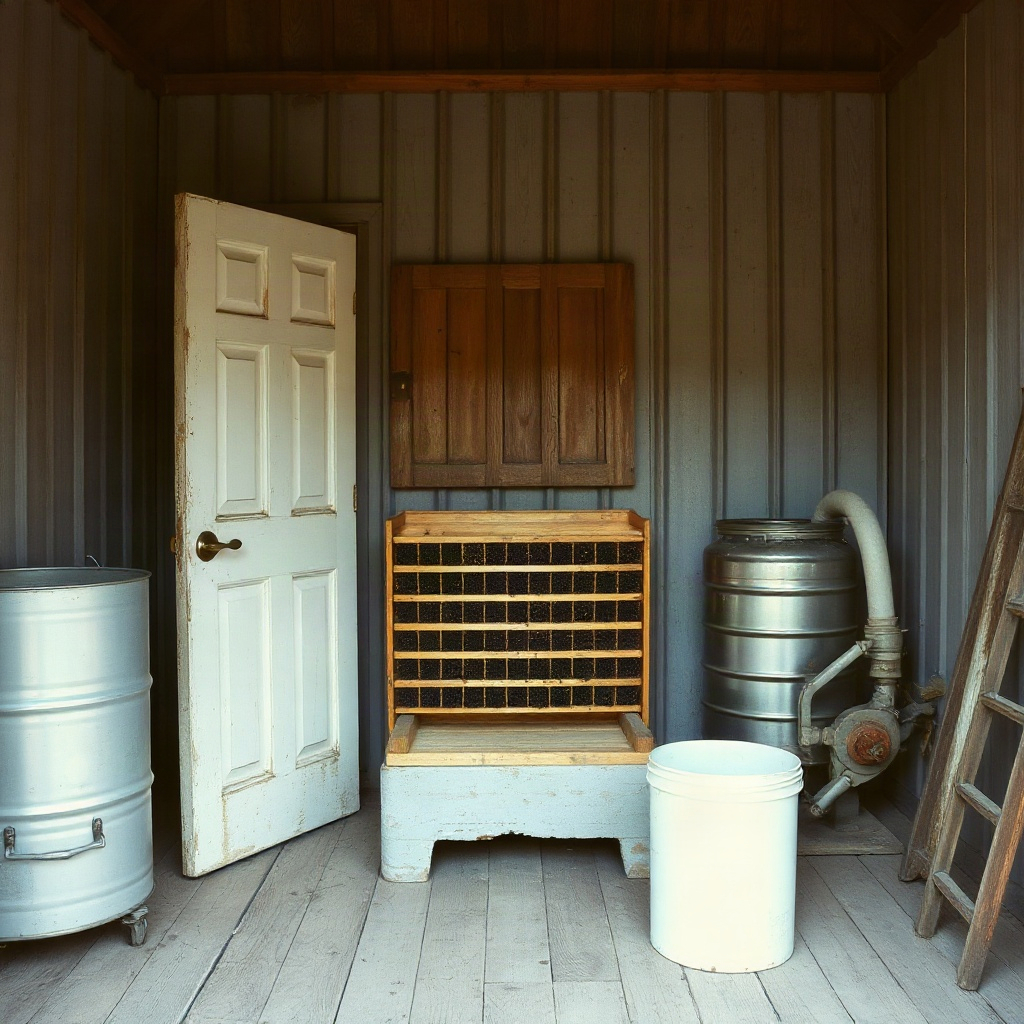
This is a tangential machine. The frame hangs flat against the basket wall, so only the face pointing outward throws. The inner face just sits there being heavy. That is the entire reason for the sequence:
1. Spin slow and take maybe a third off face A.
2. Flip every basket end for end.
3. Take all of face B, and this one you can wind up.
4. Flip back and finish face A fast.
Skip step one and you are loading the sheet from behind. A full inner face pushing outward through a half-empty outer face tears the whole comb off the wires in one piece. Three or four horizontal wires is all that's holding it. First spin slow, last spin fast — that's not advice, that's just what the wires will take.
Force goes as the square of the speed. Double the crank and you quadruple the load on the comb. Halve it and extraction very nearly stops. There is no gentle-and-quick.
Why the room is hot
Viscosity falls off a cliff with temperature — near enough halves every five degrees. A frame carried in from a cold shed will not throw at any crank speed a person can produce. It isn't stubborn, the arithmetic simply isn't there. Frames on the rack cool as they wait, and after long enough on the rack they are worse than useless: they will hold their mass through the whole spin and stay heavy and unbalance you.
The wobble
Four baskets on a plain bearing is a real rotating imbalance. One heavy frame against three light ones makes a force vector that turns with the rotor, and on a plank floor that flexes it becomes a precessing wobble that will walk a lag-bolted extractor several inches across the boards. Each of the four bolts has only so much tension in it. Wobble long enough and one shears, and every load after that is worse. So you load opposite baskets by weight, not by whatever's nearest your hand.
The drum fills
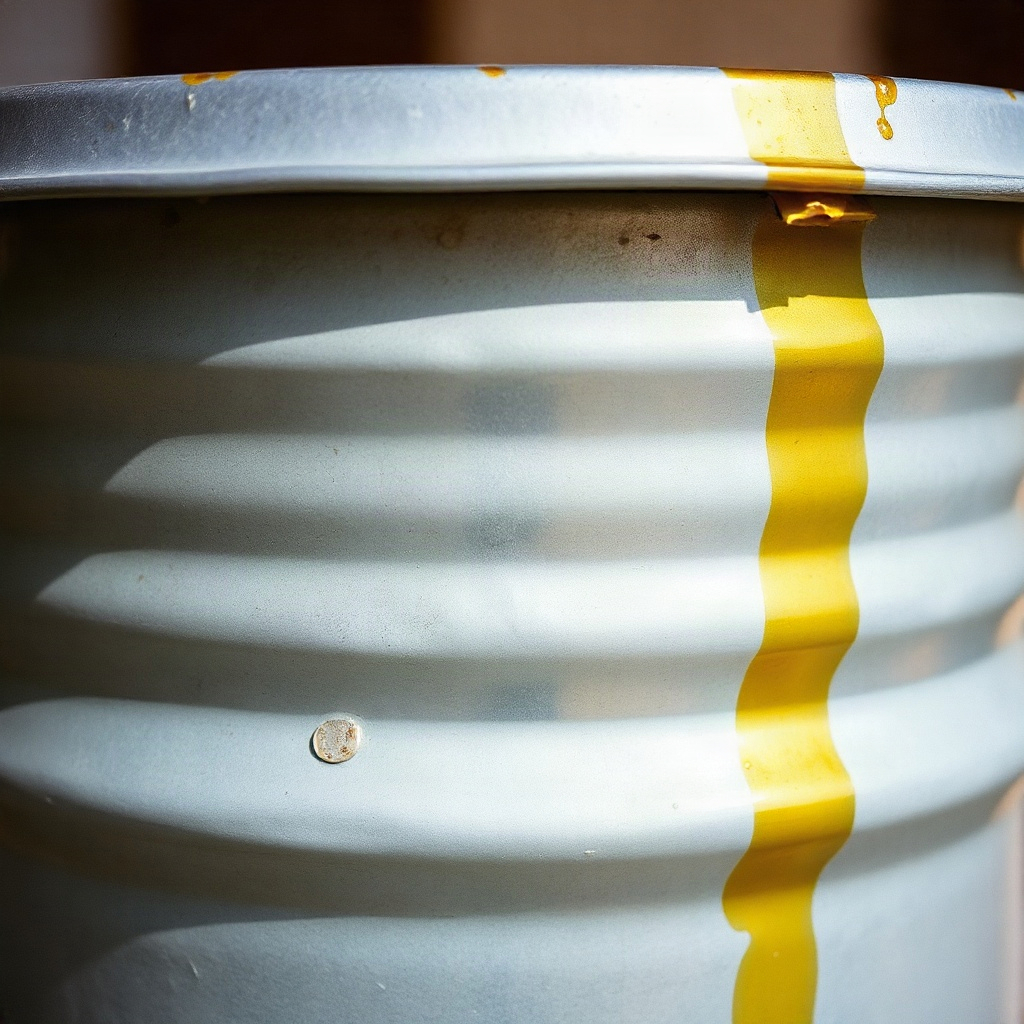
Honey pools in the bottom as you go. Let it reach the basket sweep and the rotor starts slapping through it — kills your speed, whips air and cappings wax in, turns the whole pool paler and thicker. So the gate goes open before the level gets to the basket bottoms. Flow out of the gate depends on head pressure and viscosity, which is another way of saying it dawdles when the pail is nearly full and the drum is nearly empty.
Crank is geared about four to one — one turn of your arm is four of the rotor. A deep frame carries about three kilos of honey, a shallow about half that. Sixty-two frames. The pail is a twenty.