Beam Six · Back RoomWest Midlands Regional Final · National Cake-Weighing League
18:20
first heat in 40 min
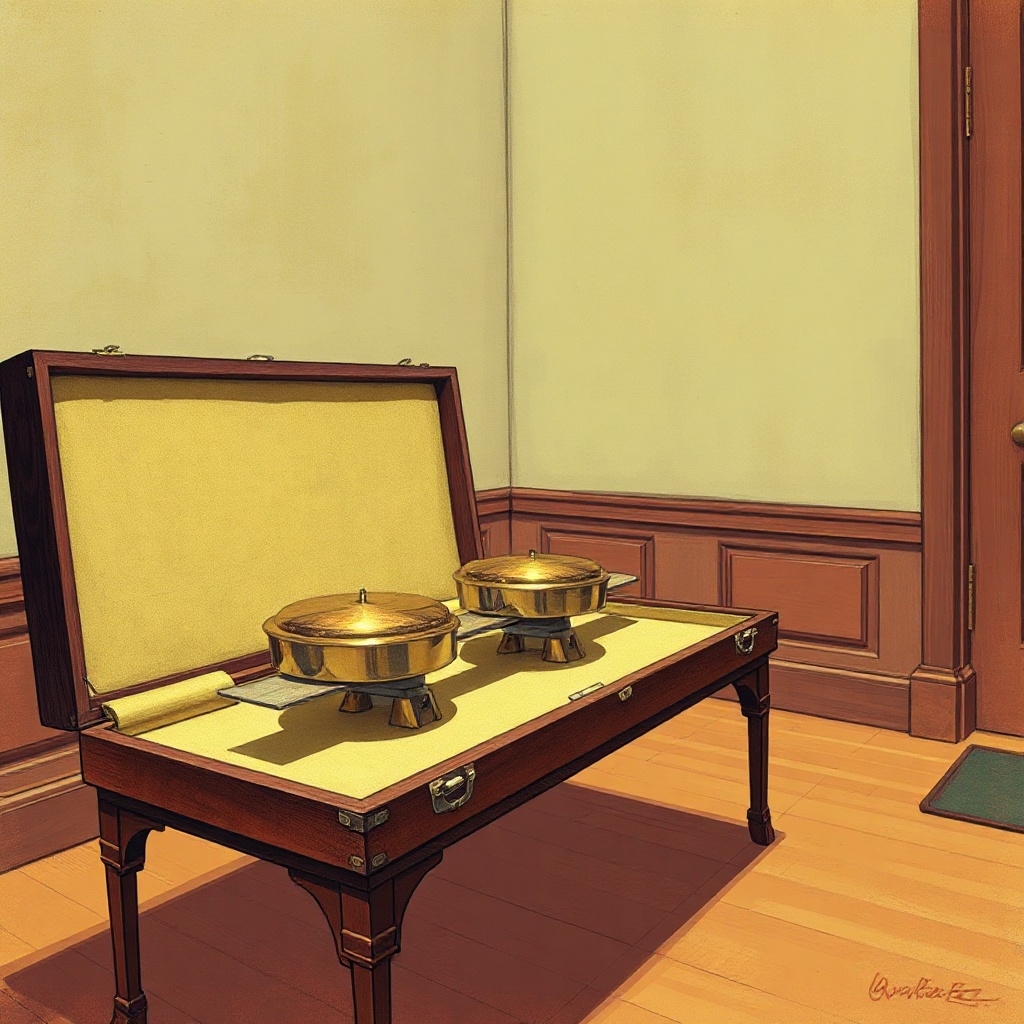
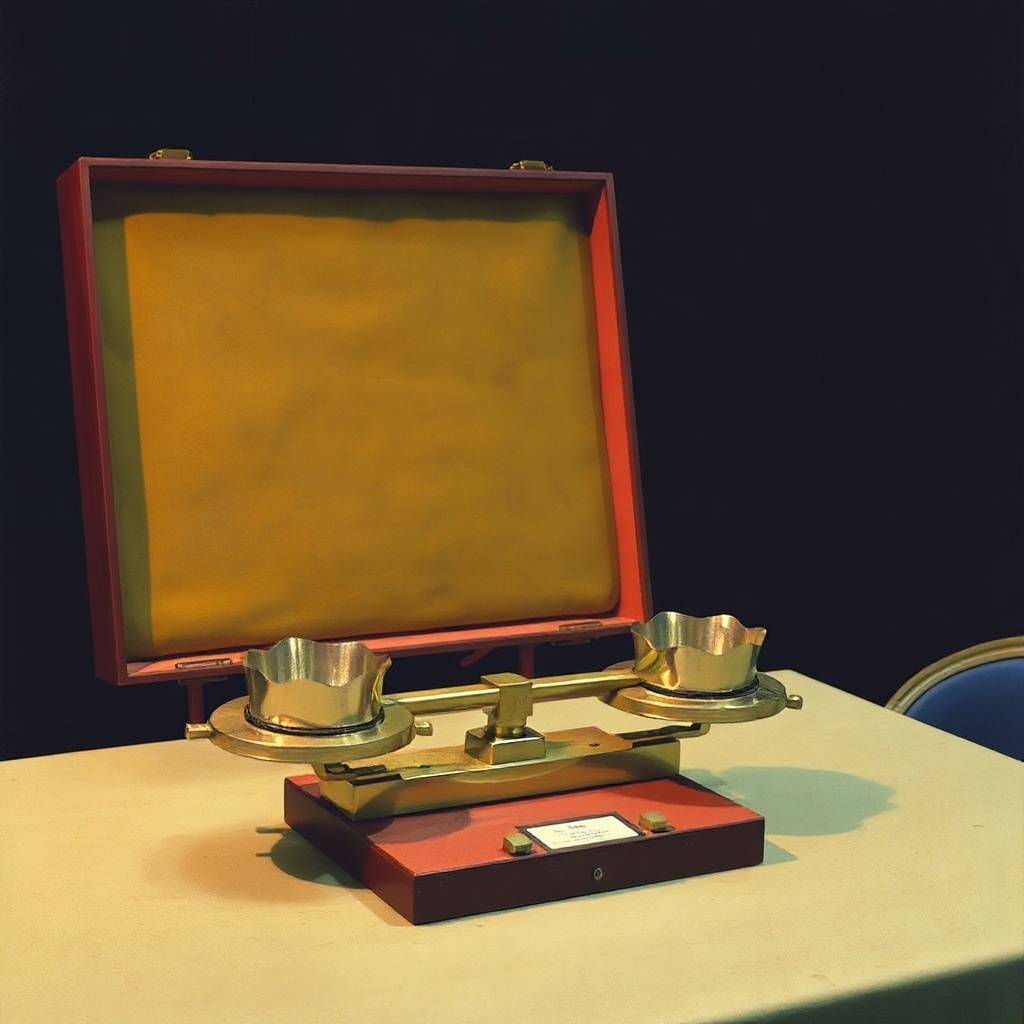
Case — brass, ten pieces, forceps to the right
Swing Counter
Right Pan & Rider
0.00 g
rider (1 g on the arm)
0.000 g — notch 0
total right-hand load
0.000 g
Beam & Heat
—
Bench Notes — pinned to the trestle on Beam Six
It compares, it doesn't measure. There is no spring in this thing anywhere. Whatever gravity is doing to the cake on the left it is doing identically to the brass on the right, so it cancels out. Carry this balance up Snowdon and the readings do not shift by a whisker. Take a spring scale up Snowdon and it lies to you all the way. The Nuneaton lot came last April with a spring dial and a smile on them. They came fourth.
Load down, never up. Fifty first. Too heavy? Take the fifty off, try twenty. Not enough? Add the next twenty. Down the case, biggest to smallest, taking off before you put on. Four moves, five at the outside. Feel your way up from the one gram and you'll be there at eleven moves with a queue behind you and the steward tapping his card.
Never chase the pointer. The pointer coming to a dead stop means the knife-edge has stuck on its plane, and a stuck edge tells you nothing at all. Let it swing. Write down where it turns — left, right, left — and take the middle of those. That midpoint is your true rest point, and you'll have it a good ten seconds before a beam ever settles.
Sensitivity and speed pull opposite ways. Drop the beam's centre of gravity a long way under the knife-edge and it comes back hard and fast and tells you nothing under a tenth. Bring the c.g. up close under the edge and it swings long and lazy and shows you hundredths. A fast balance is a stupid balance. That's not opinion, it's the period equation.
The rider does fractions. One gram, sat on a graduated arm. At the tenth notch out of ten it is pulling a full gram; at the third notch, three-tenths. It's arithmetic on a lever, not a smaller lump of brass. Anything under a gram in loose form gets lost in the velvet and then you're weighing an empty case.
Grease weighs. Skin off a thumb on a 20 g piece is a few tenths of a milligram and it never comes off again. Ivory forceps, every time. I've seen a man lose a regional on a fingerprint and he still says it was a draught.
Arms are never equal. Not really. Every beam has some inequality and it puts a constant error into every single reading you take on it. So you weigh, then you swap the pans and weigh again, and the truth sits between the two. Split the difference and the arm error cancels itself out. That's Gauss's method and it's older than the hall.
Fruit cake moves. Marzipan is holding water and a warm room wants it. Under two battens at twenty past six a heavy cake will shed two or three hundredths while you're still hunting for your last weight. Weigh fast, weigh once, and take the midpoint of your swing rather than waiting for a rest point that is moving away from you the whole time.
Beam Six — Steward's Sheet
| Heat | Item | True | Called | Error | Result |
|---|---|---|---|---|---|
| nothing called yet | |||||