Twenty Past Nine, Cutting Bench Four
Muscatine levee · the shaft is running · ticket due at the window at noon
Ticket — Bench 4 — Brumm/You
Gauge Card — tacked to the post
Hilde has your shell called before you've got your hands wet. She does it every time and she is right often enough to be insufferable about it. She leans her head over, tube still running in her own tray, and says: four thirties in that one, and I'll bet you a nickel you only find three, because you'll go chasing the fat part up by the beak like everybody does their first week.
"Four thirties is thirty-two cents. Three thirties and four eighteens is twenty-nine and a half. So yes, chase the fourth thirty — but chase it down toward the hinge where the meat is, not up on the lip where it looks pretty and cuts like a fingernail."
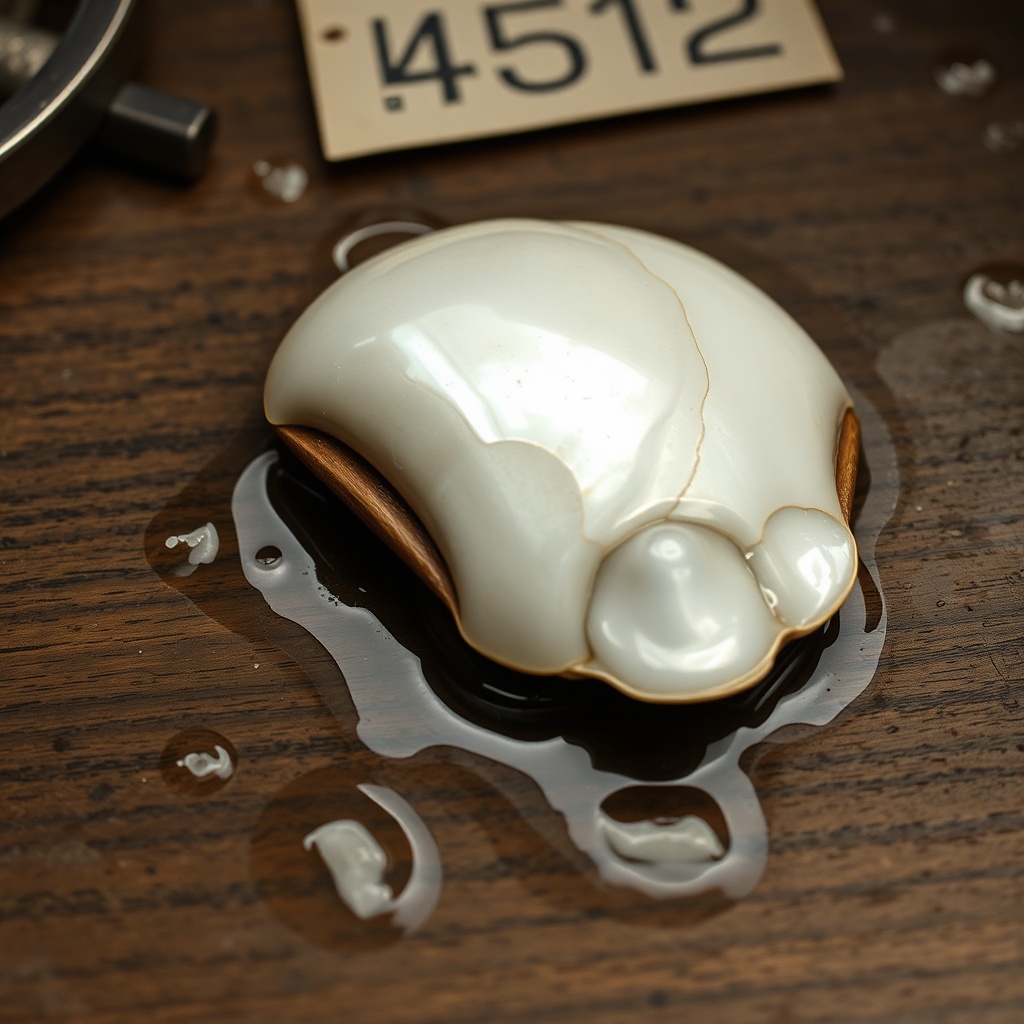
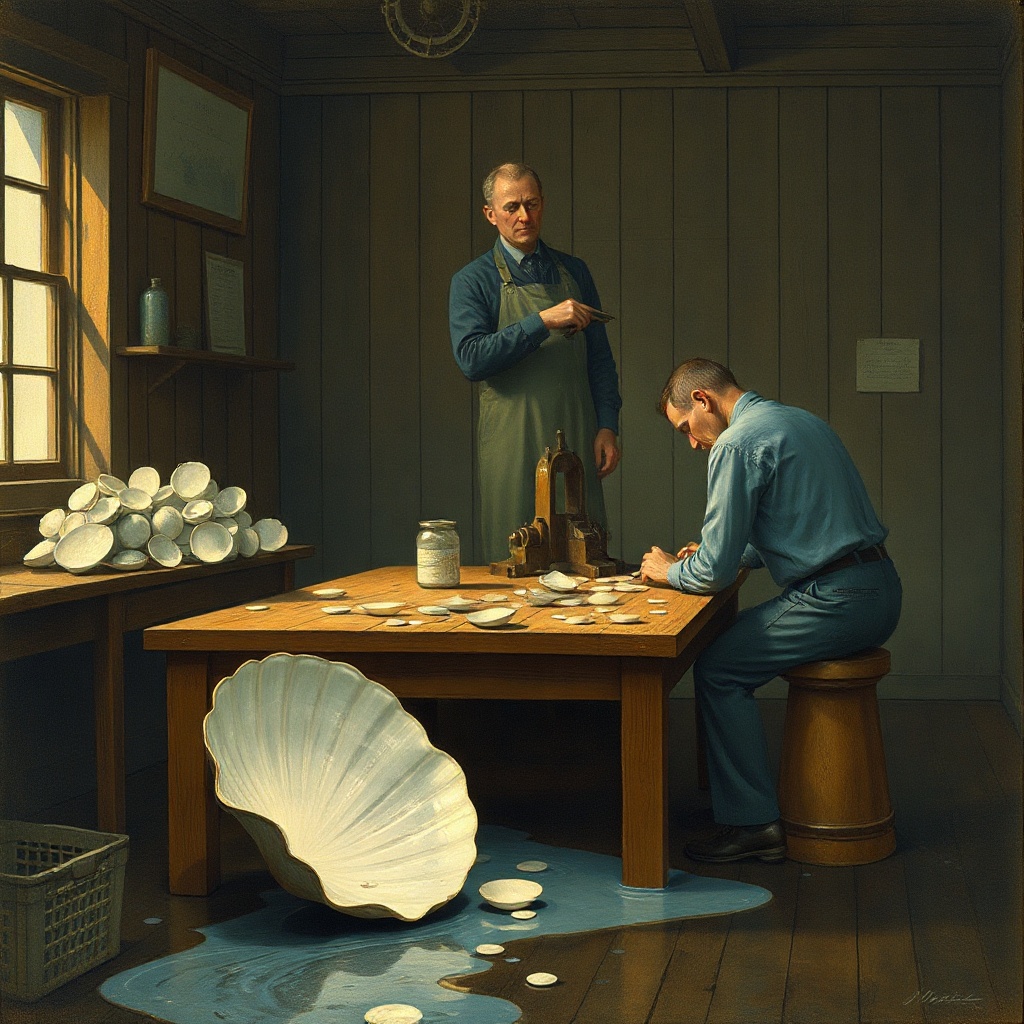
The shells come up from the crate already washboiled and they stay wet the whole time you work them, and that is not fussiness, it is the two plain reasons. One: a dry shell dusts, and the dust off nacre is the thing that fills a cutter's chest and puts him in the county hospital coughing, so the water sheet runs over the tray from the pipe all morning and you keep the shell under it. Two: a dry shell chips. The tube comes down on dry nacre and the rim goes away in flakes instead of cutting a clean wall, and a chipped blank is a chipped blank, no grinder is going to love it back.
Take your big gauges first. That's the whole of the trade in four words. A thirty-line tube wants three-quarters of an inch of good sound shell and there are only so many places on any shell that will give you that, so you find them and you take them, and then you let the eighteens go rooting around in the leavings between the holes. Do it backwards — scatter your eighteens first because they're easy and they feel like progress — and you'll have salted the shell so thoroughly that not one thirty will fit, and you'll stand there at eleven o'clock with a ticket you can't fill.
"An eighteen is worth a cent and a quarter. A thirty is worth eight. You do not spend a thirty's worth of room on a cent and a quarter, and if you do, don't tell me about it."
The thick meat sits toward the hinge. That's just how the animal built it — laid on year after year where the shell had to take the strain, and thin out toward the lip where it was still growing when the boat took it. So the lip looks broad and flat and inviting and it is a quarter the thickness, and a blank cut there comes out too shallow to turn a face on and goes straight in the reject pan. Hilde calls the cutters who crowd the lip clever boys and does not mean it kindly.
Then the beak. The beak is the fattest part of the whole shell and you skip it, every time, because the river wears it chalky — the outer layer goes soft and powdery and the softness runs down inside where you can't see it, and a tube through chalk brings up a blank that crumbles at the edge the moment the grinder touches it. It is the most tempting square inch on the shell and it is worth nothing.
Space your cuts a kerf apart. The tube has a wall thickness and it takes its own width out of the shell as it goes down, so if you set the second cut kissing the first one the wall between them is nothing at all and it breaks, and now you have two ruined blanks instead of one good one and a ragged hole where neither will ever fit again. Three sixty-fourths. Leave it. You can see it plain enough once you've broken a few.
"That's four eighteens, two twenty-fours and three thirties off this one — thirty-eight and a half cents, and it's not ten o'clock. Come on. Your saw's just standing there getting wet for free."