Zofka Pretnar, eleven years, four colonies, nought swarms
Eleven Junes I have kept bees behind this house and eleven Junes I have watched my own bees go over the wall at Jelovica and into somebody else's linden, and I have said well, and I have gone in and washed the cups. Not today. Today they hung at a height I can reach with my elbow bent. Head-high, on the second branch of the plum, since noon by the church.
Here is the thing nobody tells you until you are up to your wrists in it: they have already gone. A swarm is not a colony leaving. A swarm is a colony that left, an hour ago, out the front hole in one great pour, and what is hanging in your plum tree is a colony standing in the road with its bags packed, waiting on scouts. And before they went they filled themselves with honey — every one of them, gorged, heavy, slow to bend. That is the whole reason a woman my age can put a bare hand under nine hundred bees and not be stung. They are full as priests after a christening. They can hardly be bothered with you.
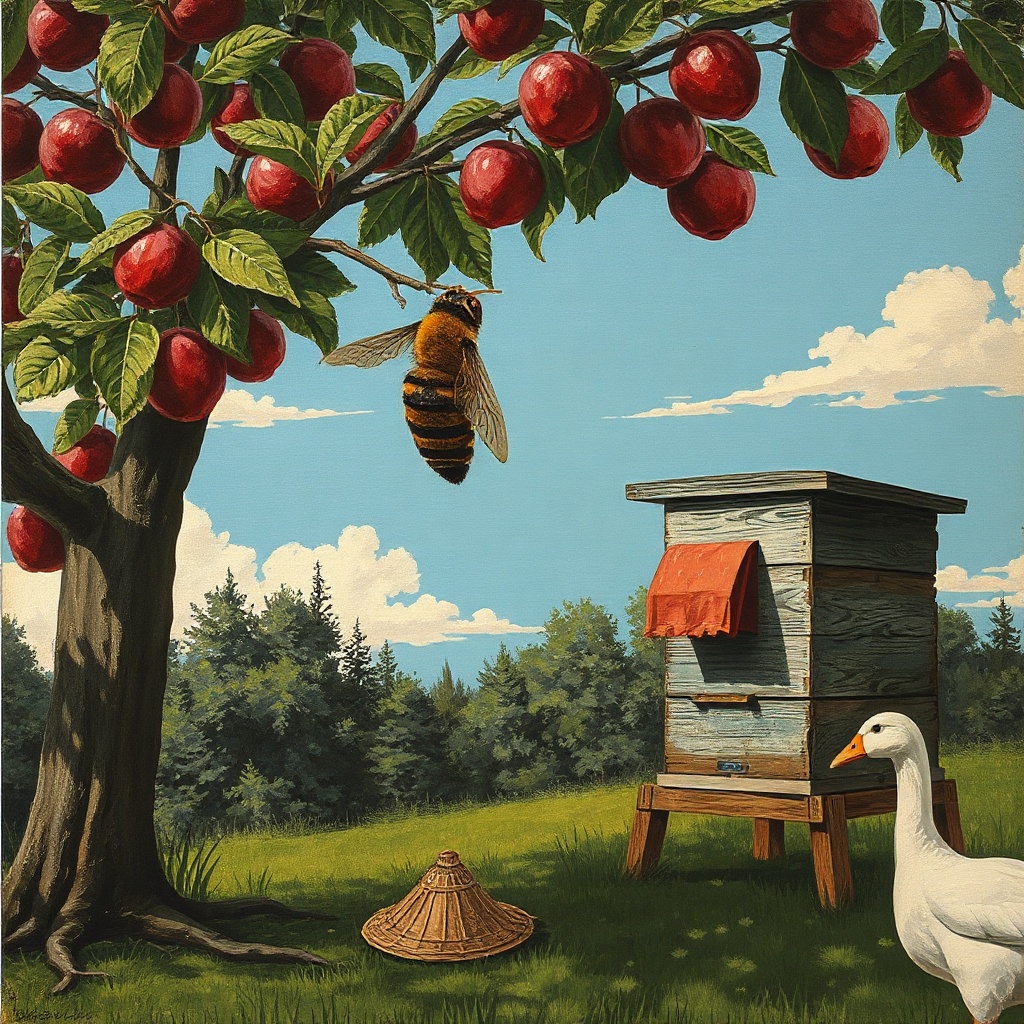
The whole job is one bee
I will say it plainly because it took me nine years to believe it. Nine hundred bees are in that tree and eight hundred and ninety-nine of them do not matter. They are there because she is there. Put her in the hive and they will pour in after her by themselves, up the sheet, in at the hole, and you can go and sit down. Leave her in the plum and you may carry every other bee in Kropa into that box by hand and they will all come straight back out and re-hang around her.
So when you shake — and you must shake, the branch will not empty itself — you shake so that the mass comes off together, in one falling weight, into the skep. Not a spray. A spray means they re-cluster, and they re-cluster wherever she happens to have landed, and if that is back up on the twig you have simply made the same afternoon happen twice, only hotter.
- Soft nudge: nothing. Cluster sags, chains stretch, holds.
- A good honest downward jerk: the bottom third detaches as one lump and drops. This is what you want.
- A wild yank: the whole thing comes apart in the air and now there are nine hundred bees between you and the house and you have done nothing but make weather.
Why the sheet is white
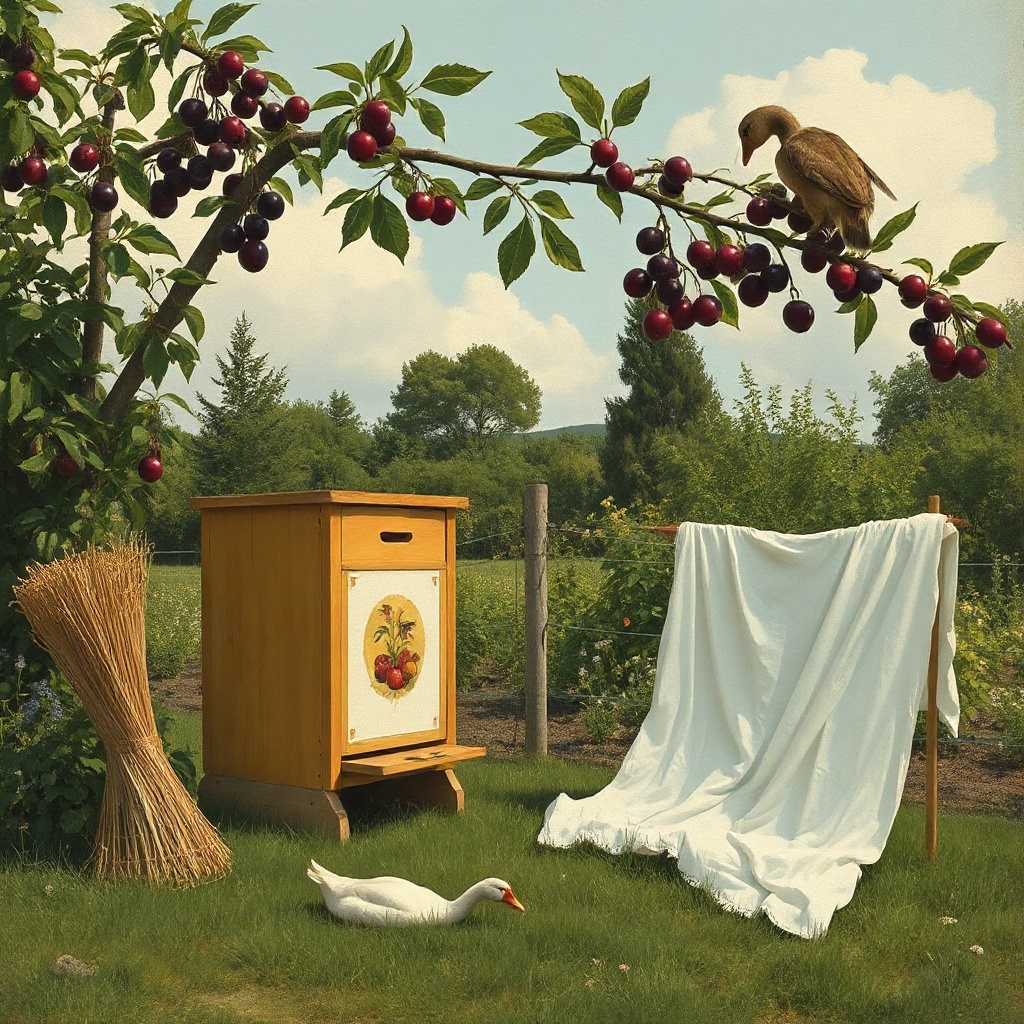
Because bees walking on white cloth in two o'clock sun will walk uphill, and they will walk toward the darkest opening they can see, and in this entire garden — the limed wall, the bleached grass, the painted panel with the sun full on it — the darkest thing by a long way is the slot at the front of that hive. That is all. There is no cleverness in it. Lay the cloth so it slopes up to the entrance board, tip the skep out at the bottom of the slope, and the slope does the work. Steeper is faster, up to a point; too steep and they slide and mill about at the fold, cursing me.
And any bee that lands in the grass instead of on the cloth is, for the next while, useless. She walks in circles among stalks taller than she is. She'll find her way eventually. Eventually is not a thing I have much of this afternoon.
The sight you are waiting for
Two or three of them stop, at the lip of the entrance, and stand with their back ends tipped up and their wings going so fast you can't see them — a little blur and a thin bright note over the top of the general hum. That is scent going out. That is here, here, here, thrown down the garden. And you will see the ones on the cloth stop wandering and put their heads down and go, all at once, in a hurry, in a stream.
When that starts, stop. Don't help. Don't touch anything. Four minutes and the air is empty and the job is over and you are standing in a garden with a wet back and nothing to do.
The pot
There is a tin pot in the beds and a wooden spoon beside it and I bang them together, and my mother banged them, and everyone on this lane bangs them at a swarm, and if you ask me does it help I will tell you it settles them, absolutely it settles them, I have always found so. I bang it anyway. It is in the beds if you want it.
(It does not settle them. It makes every bee in the air jump outward a hand's width. Bang it as much as you like. I will not stop you and I will not stop either.)
One last thing, so you don't get proud
Taking this swarm does not mean the parent hive is finished with the business. The cells are capped in there already. Next week, or the week after, out they come again with a virgin at the head of them and you will be back in the plum tree with the sheet. That's not a complaint. That's just what a good June does.
And if she ever hangs thirty feet up the linden by the mill — leave her. I mean it. No swarm on earth is worth that ladder.