A primer for riders of the
Bus 17 — The Forward Way
For those who have boarded and intend to remain seated. A small devotional handed out at the front, between the coin-slot and the door.
01
why we go forward only
There is one route. There is one direction. Everything else is a story we used to tell ourselves at the curb.
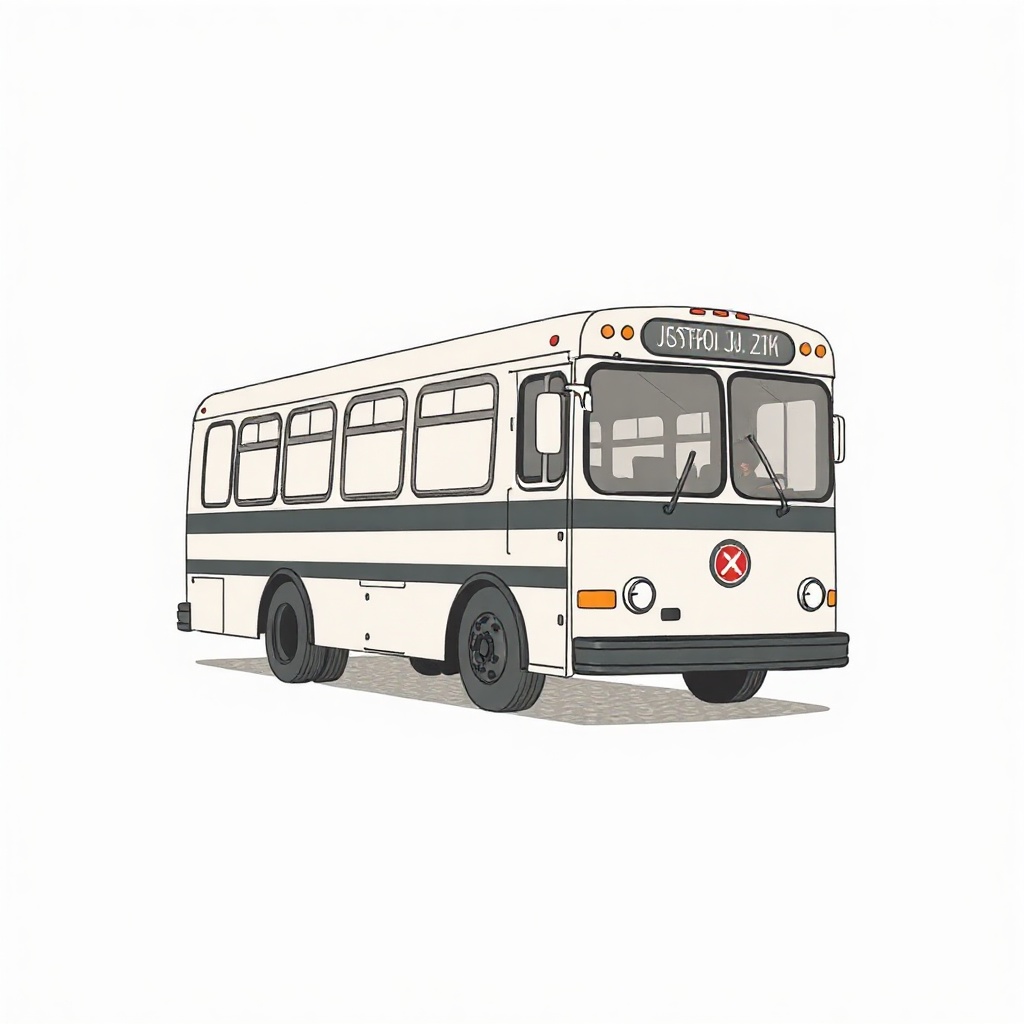
The 17 leaves the corner of Linden and Almond at 6:14 in the morning and again at 6:14 in the evening. It moves east. It moves only east. Many years ago someone painted, on the inside of the wheel-well, the Word, in small red letters that have not chipped where every other paint on the bus has chipped twice over. The Word has stayed. We have stayed with it.
We are not a religion. We are not a club. We are riders, in the strict and quiet sense — people who have understood that the road is a kindness, and that returning is a story the road does not tell. There is no driver who will turn around. There is no transfer that will carry you back. The 17 has run since the spring of 1971 and in fifty-two years it has not once made a U-turn.
We pay the fare. We take a seat. We face the front.
02
the bus has no return
There are six rules that we teach to new riders. The rules are old. The rules are not strict. We say them aloud at the start of every season, and we leave them taped to the inside of the coin-slot for any rider who would like to read them again on the way to the seat.
- The fare is small. Pay it without sighing.
- Sit facing front. The window opens with the latch on the left.
- Do not turn to look at where you have been. The seat will not let you, anyway.
- The next stop is always the right stop.
- Eat slowly. The road is long.
- When the bus pulls away from you, you have already arrived.
The sixth rule is the one that takes the longest to understand. We do not ask anyone to understand it on the first ride. We do not ask anyone to understand it on the tenth ride. It will come, as the corn comes, as the pears come, as the small clean light comes through the latch on the left at mile four.
03
the text that reveals its name
The Word is in the passage. It has not been put there. It was found there, the way a pebble is found at the bottom of a creek.
Read slowly. The Word is a single, ordinary word, and it appears once in the run of letters when the spaces are ignored. If you find it on your own, you may keep it. If you would like to be shown, the buttons are below.
There is a small habit we keep in the second hour of the ride. It begins as nothing — a way of holding the chin a little higher when the field opens on the right. We have been told the habit comes from the very first riders, who used to lift their faces in a particular slow way as the sun met the horizonward edge of the sorghum and the long flat acres caught fire in a soft, tilted yellow. Now we do it without thinking. We do it in winter as well as summer, when the sorghum is gone and the field is white and there is no fire to catch, only a pale and patient kind of waiting. We do not speak in this hour. Some of us close our eyes. Some of us look at our hands. Some of us look at the engine, the way a person looks at a creek, with no particular thought, only the small good attention that the creek deserves. The bus does not slow for this hour. The bus has never slowed for anything that was not a stop. We are grateful for that. We are grateful for the way the road continues to be the road, and for the way the driver continues to be the driver, and for the way the seat continues to hold us gently in the position we agreed to when we paid the fare. There is a small word that lives in this passage. It is the word we say at the start of every season. It is the word that is painted, in red, inside the wheel-well of the 17. It is here. You have already read it. Read again.
It is a small, ordinary word. Six letters. It means continuing in a single direction without looking back. It hides inside a longer word that gestures, gently, at the line where the sky meets the field.
04
the mantra for the long straight
Between the third stop and the fourth stop the road runs perfectly straight for nine miles. On the right are sorghum fields. On the left, an empty siding where a train used to stop. There are no houses. There is no signal. We do not speak during the long straight. We breathe along with the engine, and we say the mantra in our heads, once for each mile, and on the ninth we let it rest.
forward & forward & forward
is enough
If your stop is on the long straight, you will be let off in the field. There is no shelter. The 17 does not stop a second time, and the 17 does not come back. We have known this since 1971 and we have arrived in the field anyway, and the field has always been the right field, and the small grass has always been the small grass we needed to stand in.
05
the stations, in order
These are the eight. They are the same eight every morning and every evening. We do not have a ninth. We have never had a ninth.
- 01Linden & Almondboarding
- 02The Old Canneryrequest
- 03River Bendall-stop
- 04The Long Straightno stops
- 05Quail Hollow Roadrequest
- 06The Tabernacle (closed)no stops
- 07Apricot & 9thall-stop
- 08The Field We Do Not Nameterminus
A rider who has paid the fare may board at any of the request stops by standing at the curb and holding their fare-coin where the driver can see it. The driver will see it. The driver has not missed a held coin since 1979.
06
what is heard from the windows
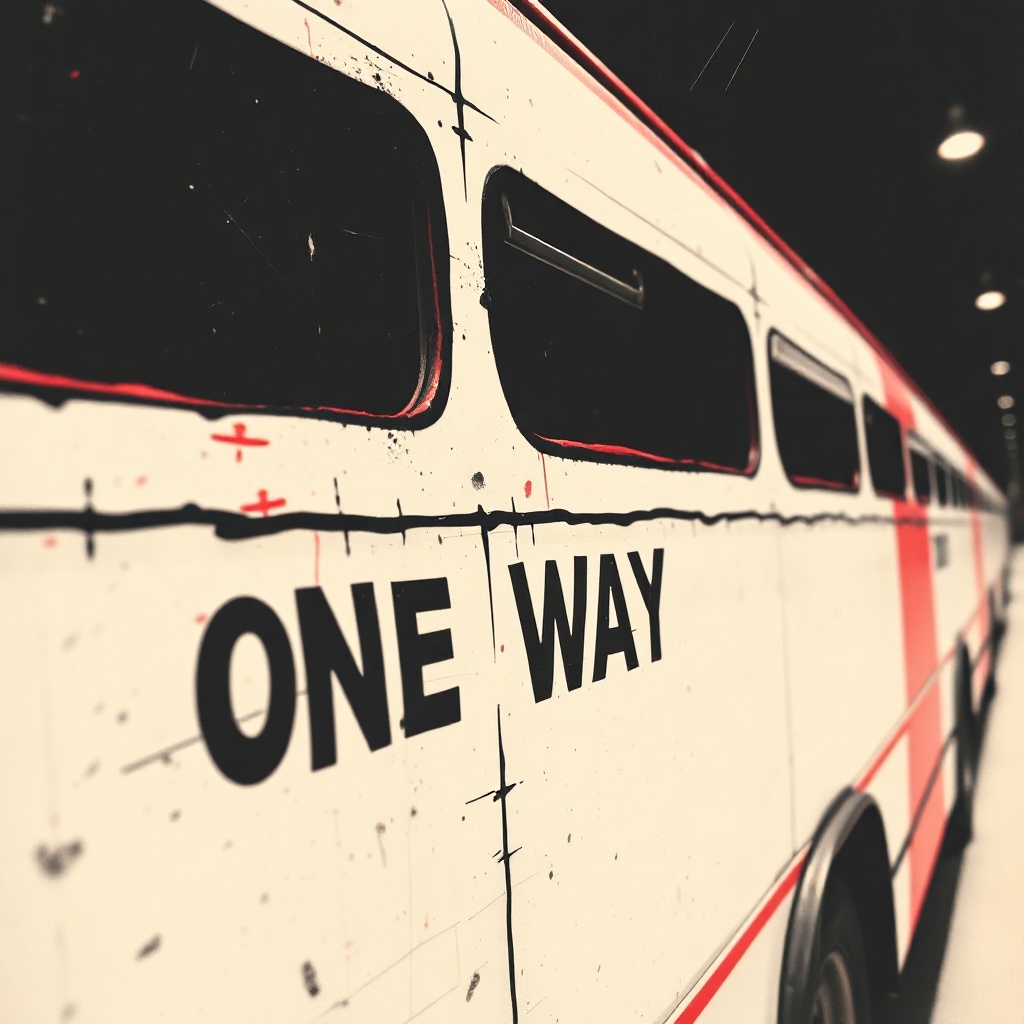
A child counting telephone poles, losing count, beginning again at one.
The latch on the left rattles between mile four and mile five and only there.
An older woman, two seats back, telling someone she has never met about a peach she ate in 1962.
The engine, which sounds like the word okay said over and over by someone who means it.
A dog, somewhere outside, agreeing.
A man near the back, saying the mantra aloud by accident, then quietly, then not at all.
The driver does not whistle. The driver has never whistled. We have asked.
At the seventh stop, a grandmother gets on with a basket of plums and offers them to whoever has not had one yet. There are always enough plums.
Someone reading a paperback, turning the pages forward. There is no other way to turn them.
A small bell that rings once at the start of the long straight and is silent for the rest of the ride.
07
the last reading
You will know it is your stop because you will not want to get off, and you will get off anyway, and the wanting will fall away on the curb like a coat you did not know you were wearing.
The Society of the Forward Bus is not an organization. There is no membership. There are no dues beyond the fare. If you ride the 17 and do not turn around, you are already among us. If you ride the 17 and do try to turn around — and many have tried — you will find that the seat has held you, gently, in the forward position, and that this was a kindness, and that we are sorry we did not warn you, except we did, and you were not listening, and that is also a kindness.
The 17 leaves Linden and Almond at 6:14. The fare is one dollar and ten cents in coins, or one bright thing of equivalent value. Onions accepted. Apples preferred. Plums in season. We are at the corner every morning. We are at the corner every evening. We will save you a seat by the window with the latch on the left.
Onward.